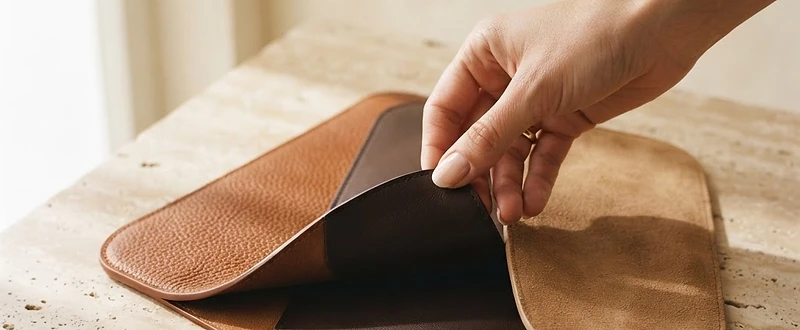
The Edit · Leather Guide
Know Your Leather
Texture changes how a bag looks, feels and ages. Understanding a few terms helps you choose a crossbody that suits the way you'll use it.
Full-grain
- What it is
- The strongest, most durable part of the hide, with the natural grain left intact.
- How it looks
- Natural, with subtle variation in grain and sometimes minor marks that confirm authenticity.
- How it feels
- Firm and substantial, softening with use.
- Durability
- Highly durable. Resists moisture and tearing.
- Patina
- Develops a rich, personal patina over years.
- Care
- Wipe with a dry cloth. Condition twice a year.
- Advantages
- Most durable, ages beautifully.
- Trade-offs
- Can show natural marks; higher cost.
Top-grain
- What it is
- Full-grain sanded and finished to remove imperfections, leaving a uniform surface.
- How it looks
- Smooth and consistent.
- How it feels
- Supple and even.
- Durability
- Durable and slightly more pliable than full-grain.
- Patina
- Subtle patina; more consistent over time.
- Care
- Wipe with a soft cloth. Condition occasionally.
- Advantages
- Uniform, refined, lower maintenance.
- Trade-offs
- Less character than full-grain; thinner finish.
Pebbled
- What it is
- Leather with a textured, pebbled grain — natural or pressed.
- How it looks
- Textured, with a distinctive pebbled surface.
- How it feels
- Tactile, with grip.
- Durability
- Very good — the texture masks minor marks and scratches.
- Patina
- Subtle; the texture stays consistent.
- Care
- Brush gently to remove dust. Condition every few months.
- Advantages
- Practical, low-stress, hides wear.
- Trade-offs
- Less smooth and refined than nappa.
Smooth
- What it is
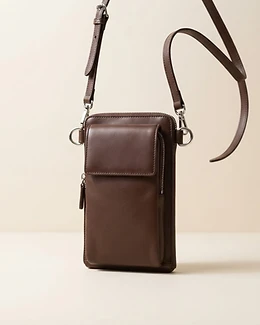
- A clean, even surface — often nappa — with the grain buffed smooth.
- How it looks
- Refined and modern.
- How it feels
- Soft and luxurious.
- Durability
- Softer and more delicate; shows wear more readily.
- Patina
- Develops character with use.
- Care
- Protect from dye transfer. Wipe gently. Condition regularly.
- Advantages
- Refined, elegant, modern.
- Trade-offs
- More delicate; needs more care.
Suede
- What it is
- A napped, matte finish on the underside (split) of the hide.
- How it looks
- Matte and velvety.
- How it feels
- Soft and tactile.
- Durability
- More delicate; sensitive to water and staining.
- Patina
- Changes with wear; can flatten in high-contact areas.
- Care
- Brush with a suede brush. Protect with a suede spray. Avoid water.
- Advantages
- Tactile, distinctive, soft.
- Trade-offs
- Hardest to care for; not water-friendly.
Vegetable-tanned
- What it is
- Leather tanned using plant-based tannins rather than chrome.
- How it looks
- Starts light; deepens in tone with light and oils.
- How it feels
- Firm and structured.
- Durability
- Firm and long-lasting; ages beautifully.
- Patina
- Strong — darkens and warms over time.
- Care
- Wipe dry. Condition sparingly. Avoid prolonged direct sunlight when stored.
- Advantages
- Ages the most beautifully; environmentally gentler tanning.
- Trade-offs
- Firmer; less water-resistant; changes color with use.
Corrected grain
- What it is
- Lower-grade leather buffed to remove imperfections, then embossed with an artificial grain and coated.
- How it looks
- Uniform, with an applied grain pattern.
- How it feels
- Smooth but less breathable.
- Durability
- Moderate; the coating can wear over time.
- Patina
- Little to none; the finish stays consistent.
- Care
- Wipe with a damp cloth. Avoid conditioners that can affect the coating.
- Advantages
- Consistent, affordable, easy to clean.
- Trade-offs
- Less durable than full/top-grain; less character.




Comparison
| Leather | Durability | Patina | Maintenance | Best for |
|---|---|---|---|---|
| Full-grain | Very high | Strong | Moderate | Everyday, long-term |
| Top-grain | High | Subtle | Low | Refined everyday |
| Pebbled | High | Subtle | Low | Low-stress everyday |
| Smooth | Moderate | Moderate | Higher | Day to evening |
| Suede | Lower | Changes | Higher | Occasional, dry use |
| Vegetable-tanned | High | Strong | Moderate | Aging beautifully |
| Corrected grain | Moderate | Little | Low | Affordable consistency |




FAQ
Leather, answered.
Full-grain or top-grain — which is better?
Full-grain is the most durable and develops the strongest patina. Top-grain is slightly more uniform and pliable. Neither is universally better; it depends on how you want the bag to age.
What is vegetable-tanned leather?
Leather tanned using plant-based tannins rather than chrome. It's firmer, ages beautifully, and deepens in color with light and oils.
Will pebbled leather scratch easily?
The pebbled texture naturally masks minor marks and scuffs, making it a practical choice for everyday carry.
How should I store a leather bag?
Empty the bag, stuff it lightly to hold its shape, and store it in the dust bag away from direct sunlight and humidity.
How often should I condition leather?
Twice a year for most leathers is enough. Suede and vegetable-tanned leather have their own care notes — see our care guide.